Anvil’s armored pathfinder
The Terrapin is an Anvil Aerospace spacecraft built for reconnaissance, support and survival in demanding environments. Its compact, heavily protected hull gives it a very different profile from an exposed light fighter. In Star Citizen, the Terrapin’s story runs through naval patrols, Marine operations, exploration and civilian rescue work. The ship’s value lies in getting its crew and information through situations where a lighter craft might have little protection.
The first Terrapins
Production Terrapins began reaching the United Empire of Earth Navy in 2796. The first ships formed part of the newly established 198th Utility and Support Wing, then joined active fleets as they became available. Their early assignments demonstrated the usefulness of a small armored support craft that could carry personnel and assist wider operations. The Navy adopted the Terrapin during a period of military reorganization following the end of the Messer era.
The UEE Marines soon ordered Terrapins as well. Although the ship did not carry the heavy armament of a dedicated dropship, its protection and scanning equipment made it suitable for smaller deployments and convoy work. In 2820, a Marine Terrapin located and boarded the hijacked liner Astoria. The boarding ship was destroyed in the explosion that followed, but its crew survived along with passengers and crew members they had helped lead to safety.
A scout that could endure
Reconnaissance units began adopting the Terrapin after its introduction as a utility spacecraft. Some pilots accustomed to lighter and faster scouts initially resisted its emphasis on armor. The ship’s reputation changed as crews demonstrated that protection and careful operation could also serve a reconnaissance mission.
In 2814, Commander Bruce Dunbar tracked a Vanduul raiding party across four systems in a Terrapin without being identified. The information gathered during that mission helped the UEE understand the raiders and supported a later interception by the Ninth Fleet. In the years that followed, Terrapins became a more familiar part of frontline reconnaissance units.
Operating the early ship required attention to power management and flight configuration. Anvil later used accumulated experience from pilots and crews to refine the design. The Block II version began rolling out in 2845, with upgrades that strengthened the Terrapin’s suitability for exploration. Improved shielding, extended batteries and more capable sensors supported work that depended on collecting and retaining information rather than simply engaging an opponent.
Service beyond the battlefield
The Terrapin’s history includes search and rescue, transport and scientific support as well as military reconnaissance. Ships of the type took part in the immense Synthworld project, carrying out support and rescue duties during its long construction effort. Their varied assignments illustrate why a protected utility spacecraft could remain useful in peacetime as well as during conflict.
The design even became familiar to a wider civilian audience through the fictional film To the Stars. Its brightly painted Terrapin, named Maxwell, served as the explorers’ home in the story. The ship used for filming was a Navy vessel. After returning to service, it was eventually preserved in its screen appearance at the Garber Aerospace Museum.
Later Terrapin models continued to serve in an era of more frequent Vanduul engagements. Surplus and refurbished ships also reached civilian owners. Survey companies, transport operators and rescue organizations found uses for a durable craft equipped to observe its surroundings. For individual operators, that history connects the Terrapin to both the Navy’s frontier patrols and the quieter work of reaching people or places that need support.
The workshop model
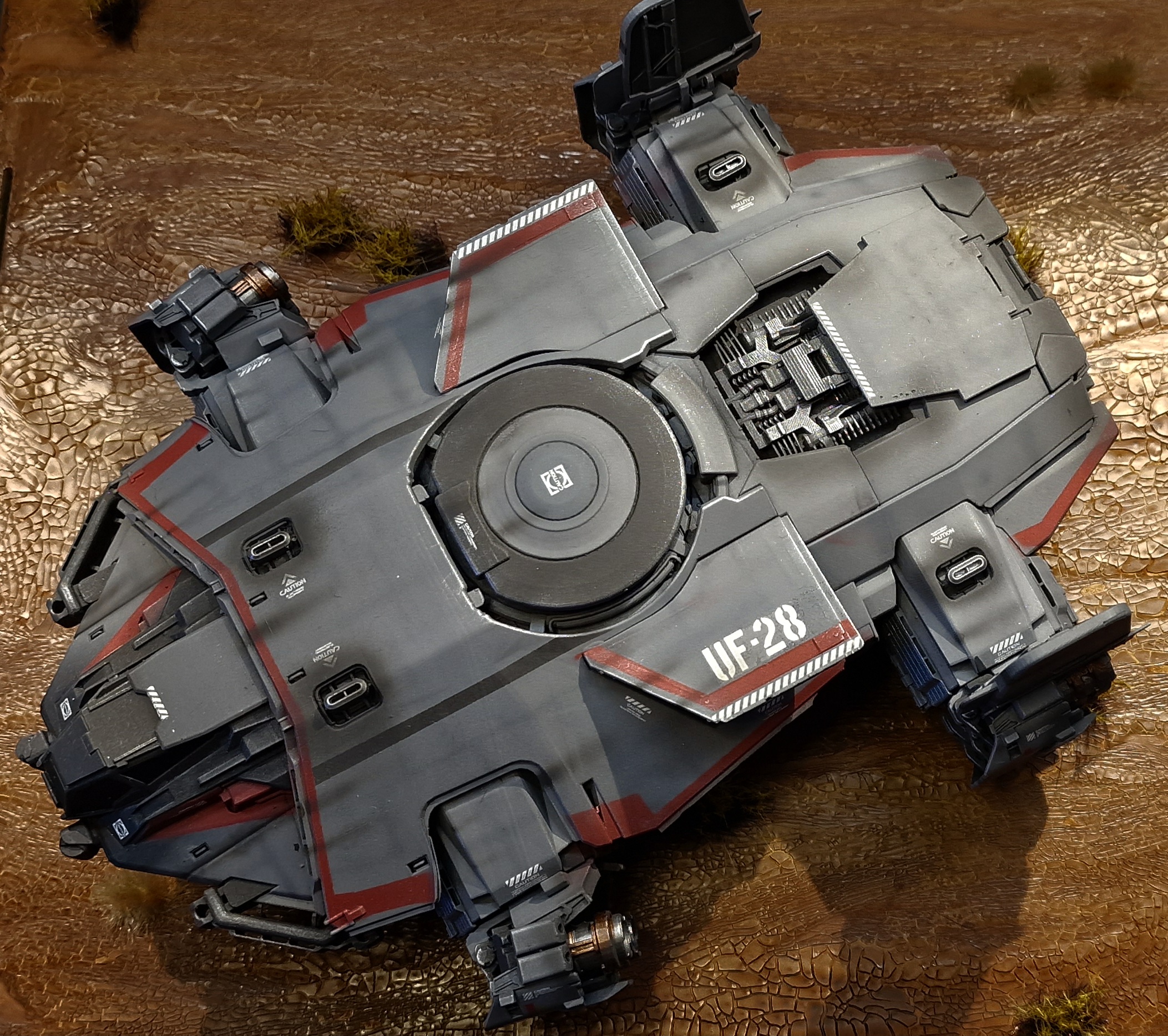
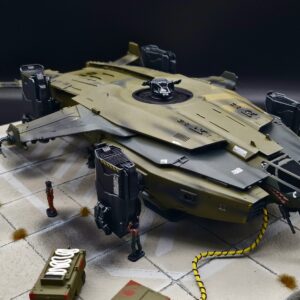
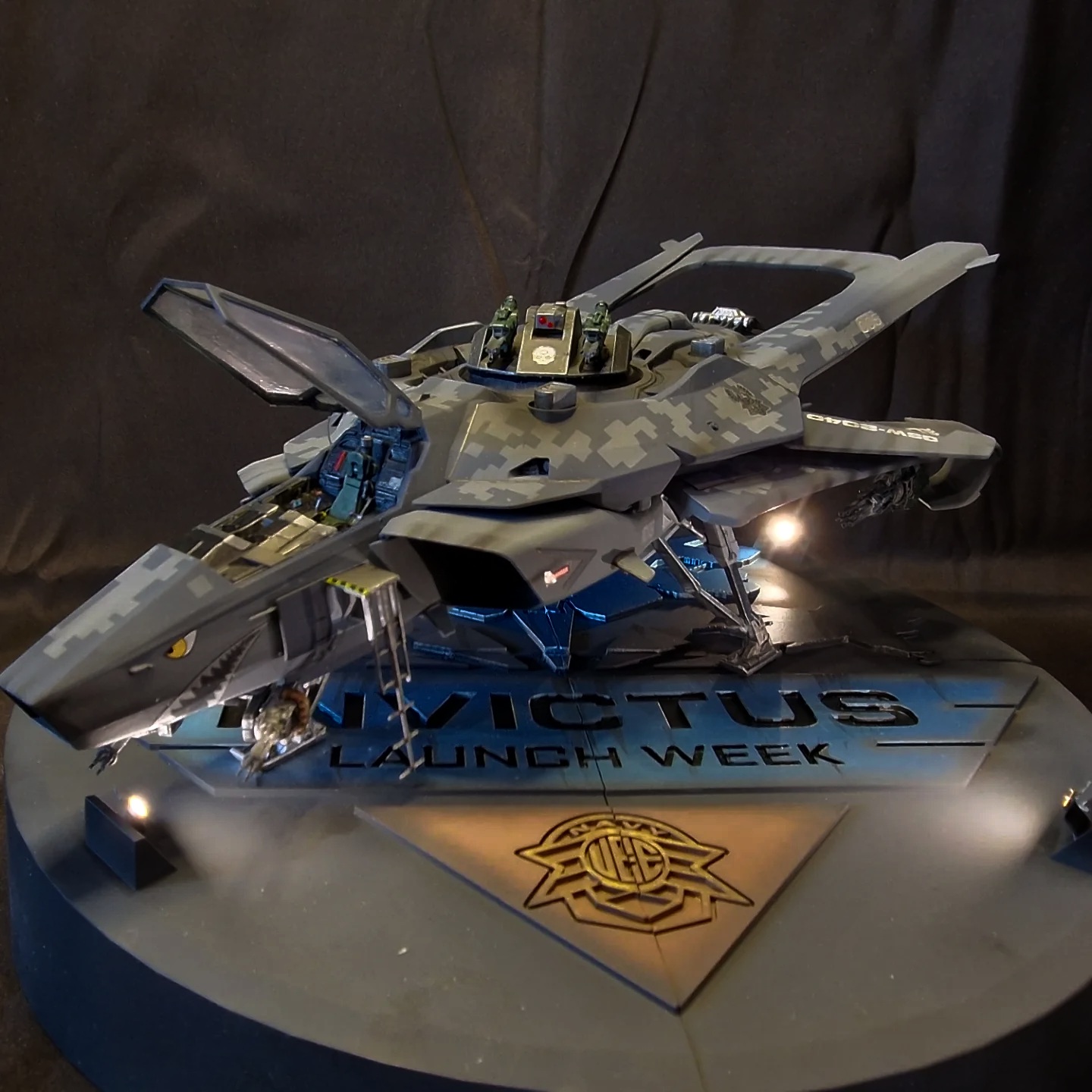
Polacus Workshop’s miniature captures the enclosed proportions of the Terrapin. The gallery and workshop video show the broad protected hull and the compact arrangement of the engines around it. Different viewpoints make the ship’s sturdy form clear, from the front of the cockpit to the rear of the physical build.
Workshop video