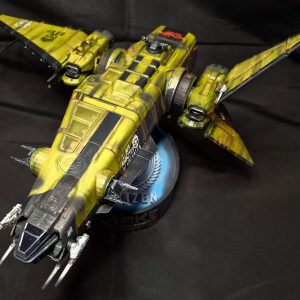
Vulture
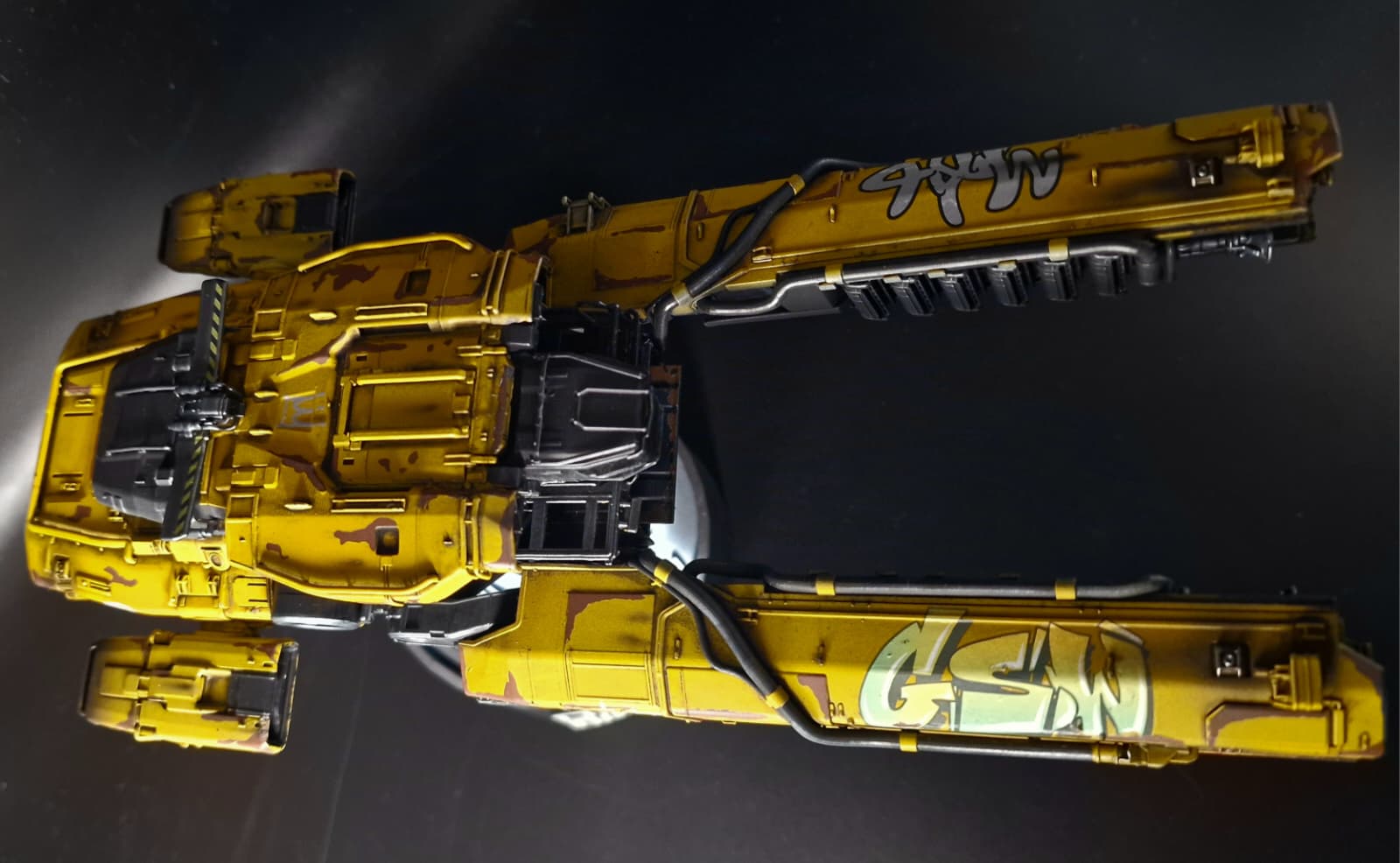
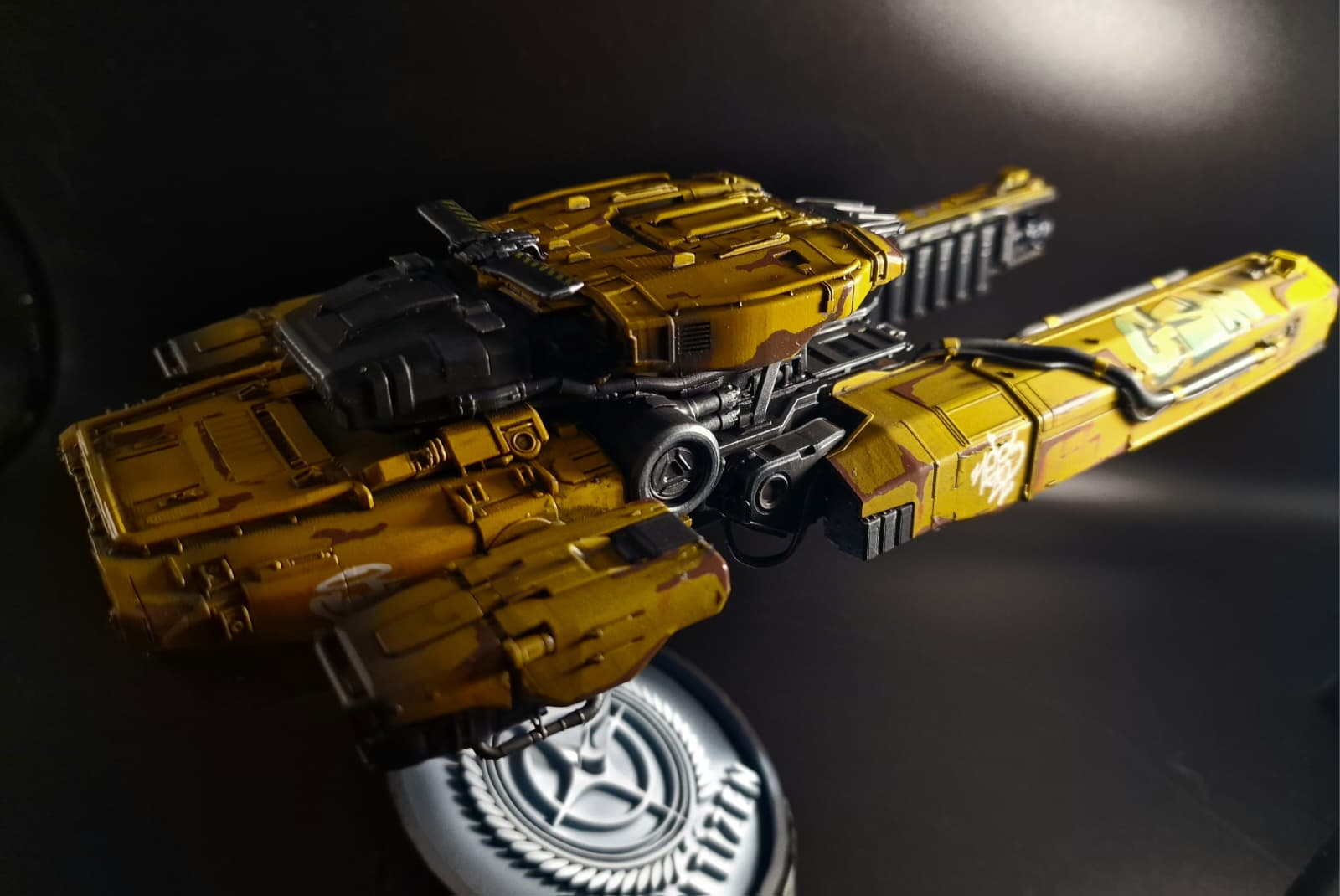
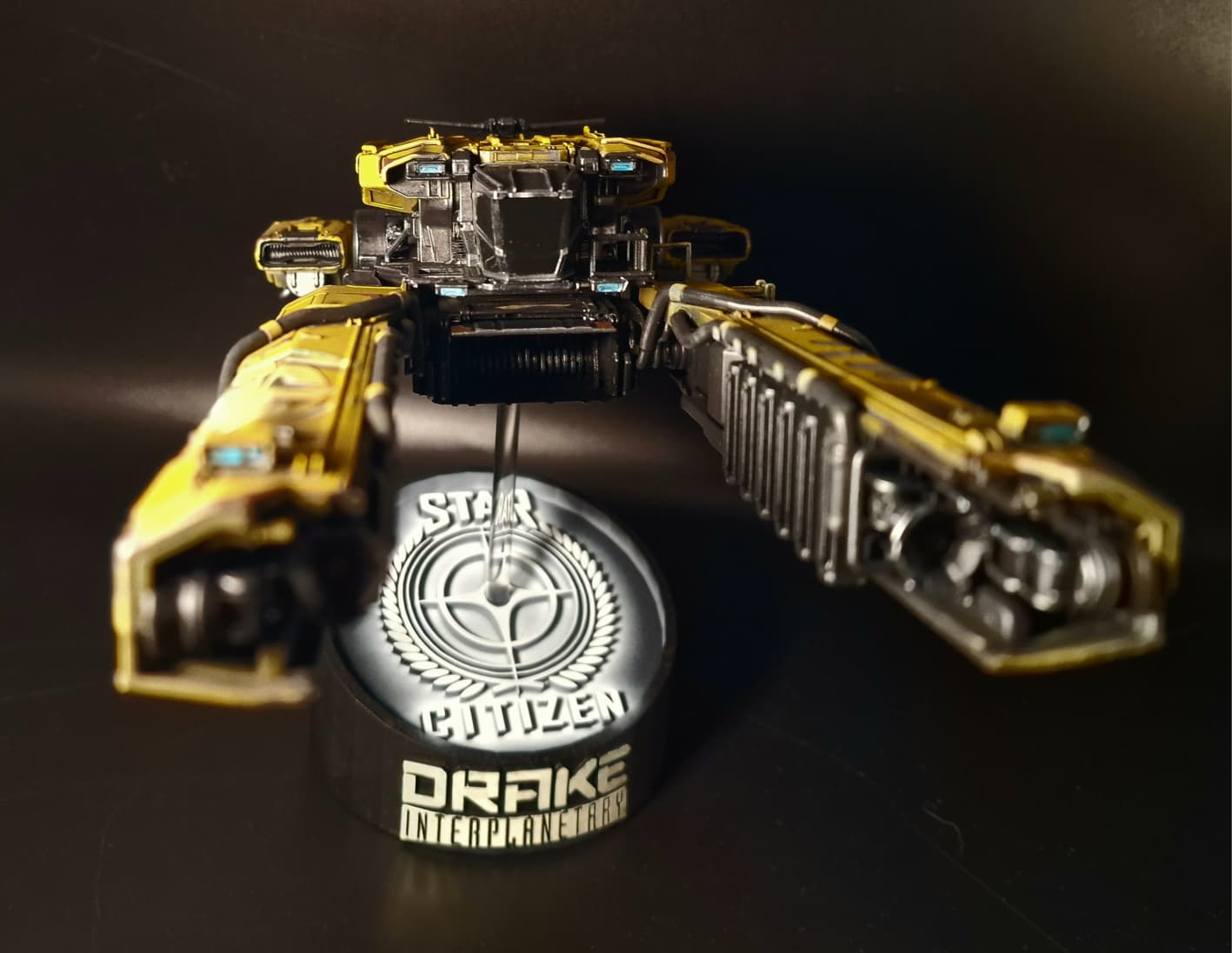
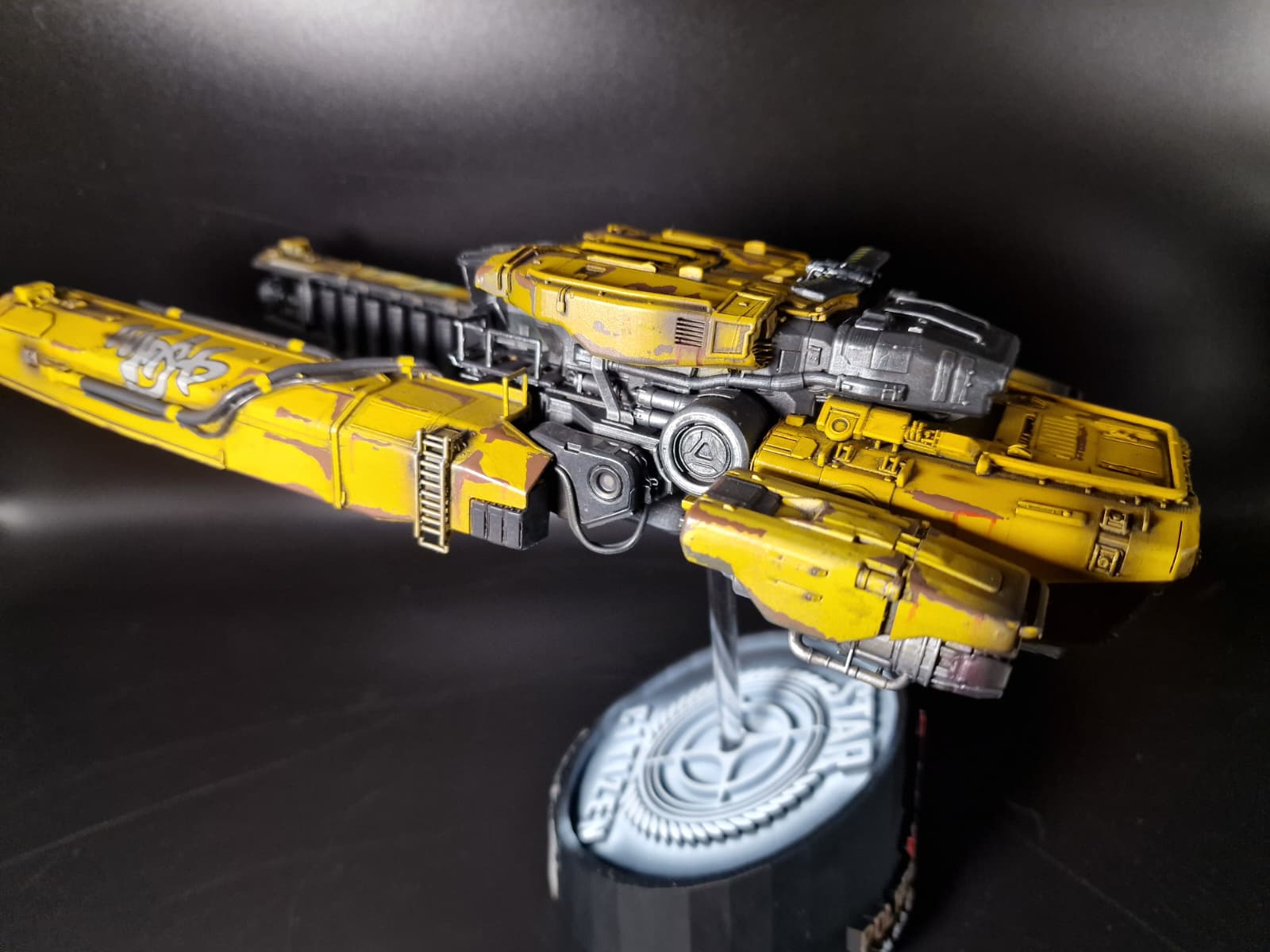
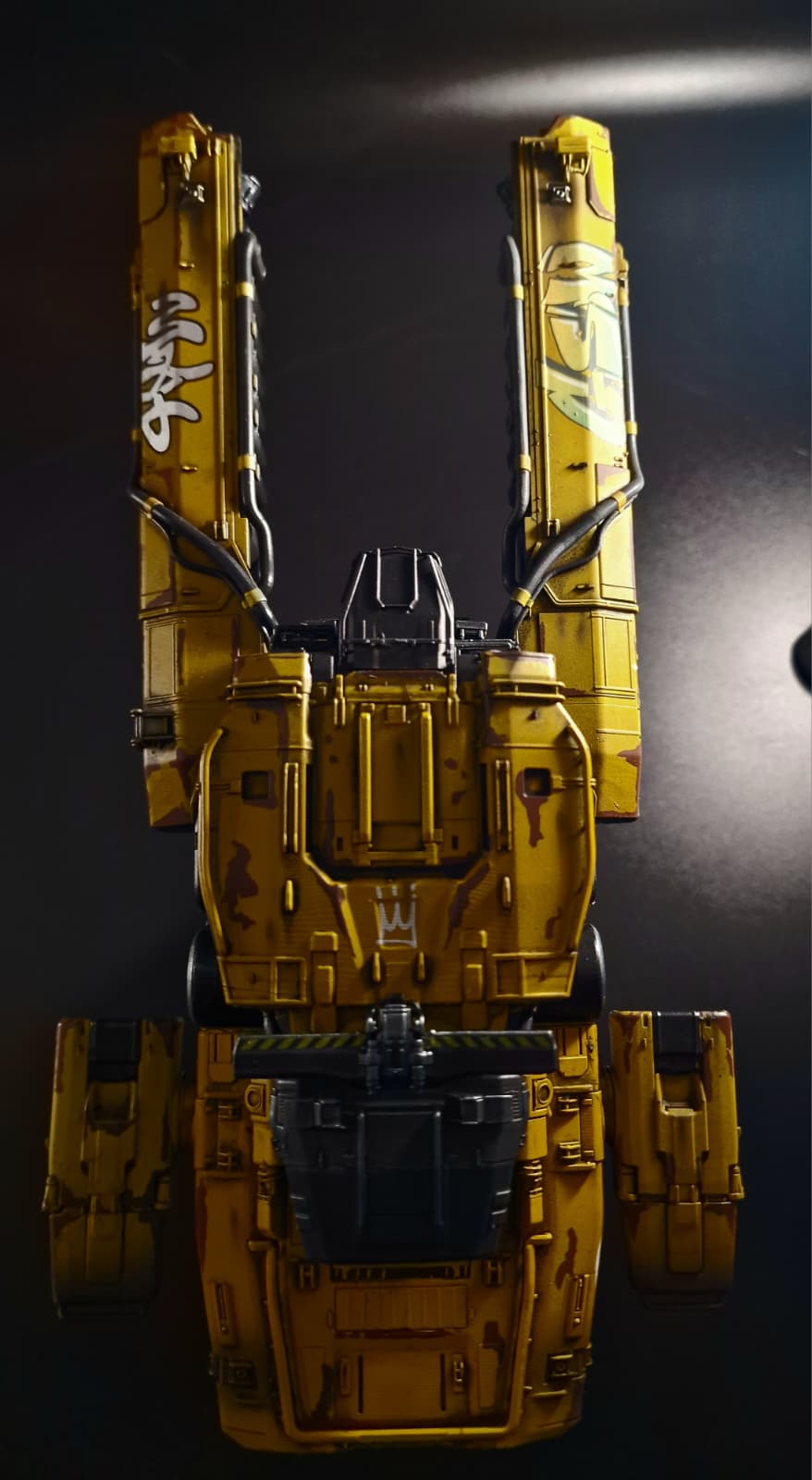
A hand-painted resin miniature of the Drake Vulture light salvage ship.
450,00 €
This ship has already flown
Drake Vulture
The Drake Vulture is a compact salvage ship built around a simple premise: a single operator can find value in the remains of another spacecraft. In Star Citizen, wrecks are part of the landscape of human expansion, from disabled ships abandoned in remote space to debris left after a battle. The Vulture turns those remains into an opportunity. Its long forward arms, small cockpit and working equipment give it the appearance of a machine designed for a job, with every major part contributing to the process of recovering material.
A story rooted in salvage
The Vulture’s fictional history reaches back to a difficult recovery operation involving the freighter Empire Slipper. In 2895, the vessel suffered system failures and entered a dangerous asteroid field near a red giant. The resulting collision left the ship disabled in an irradiated area, and its disappearance prompted a lengthy search. Its cargo included valuable material, but the conditions around the wreck made recovery exceptionally difficult.
Drake Interplanetary, then a young manufacturer, became involved in the salvage effort. Its engineers adapted a prototype Cutlass test vehicle known as the VLT-3 for work in the hazardous field. The conversion incorporated stronger shielding and external manipulator arms. Those arms allowed the crew to handle recovery tasks from the ship, reducing the need to work outside in a dangerous environment.
The converted craft operated from a station outside the most hazardous area. Across a series of missions, its crew recovered cargo and flight recorders from the wreck. The operation brought Drake attention and helped demonstrate that a relatively small, specialized vessel could perform demanding work where a conventional recovery effort faced serious obstacles. The account also includes controversy around Drake’s handling of the recovered flight data, fitting the company’s complicated public reputation in the setting.
Drake subsequently showed the converted craft at aerospace exhibitions. Interest in a purpose-built independent salvage vessel helped lead from that experimental machine toward the Vulture. The connection to the VLT-3 gives the later ship a history beyond its current shape: its characteristic working arms descend from the practical need to reach into a hazardous wreck and retrieve useful material.
An independent operator’s ship
The Vulture is designed for an individual pilot who wants to work without assembling a large salvage crew. Its two forward booms position the recovery equipment around the target. Scraper systems strip useful material from hull surfaces, while the ship’s processing equipment prepares recovered resources for storage and transport. The cockpit provides the operator with a view of the work area between the arms.
Salvage in the Star Citizen universe is more than collecting pieces after an explosion. A wreck can tell a story about the flight that ended there, the people who owned the ship and the circumstances of its loss. For the Vulture’s pilot, however, that history also has a practical dimension. Finding a suitable site, positioning the ship, working through the remains and leaving with recovered material all form part of a working expedition.
The ship also reflects Drake’s place in the setting. The manufacturer is known for practical spacecraft and for a public image that has attracted controversy as well as loyalty. The Vulture fits that identity through its exposed industrial character. The salvage arms dominate the view from the front, and the cockpit and central hull sit behind the equipment that does the work. It looks like a craft whose pilot expects to spend time close to damaged metal.
The workshop model
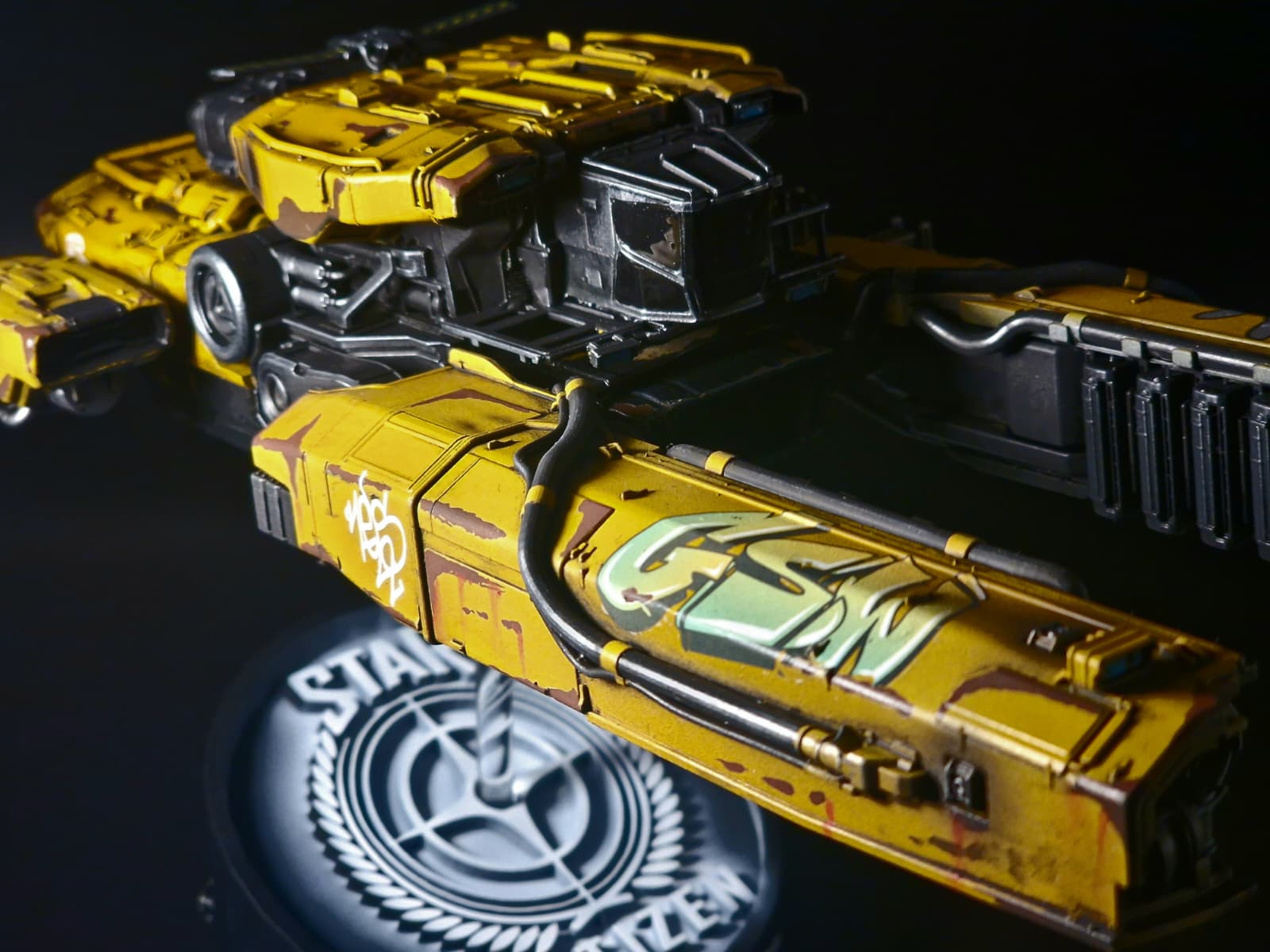
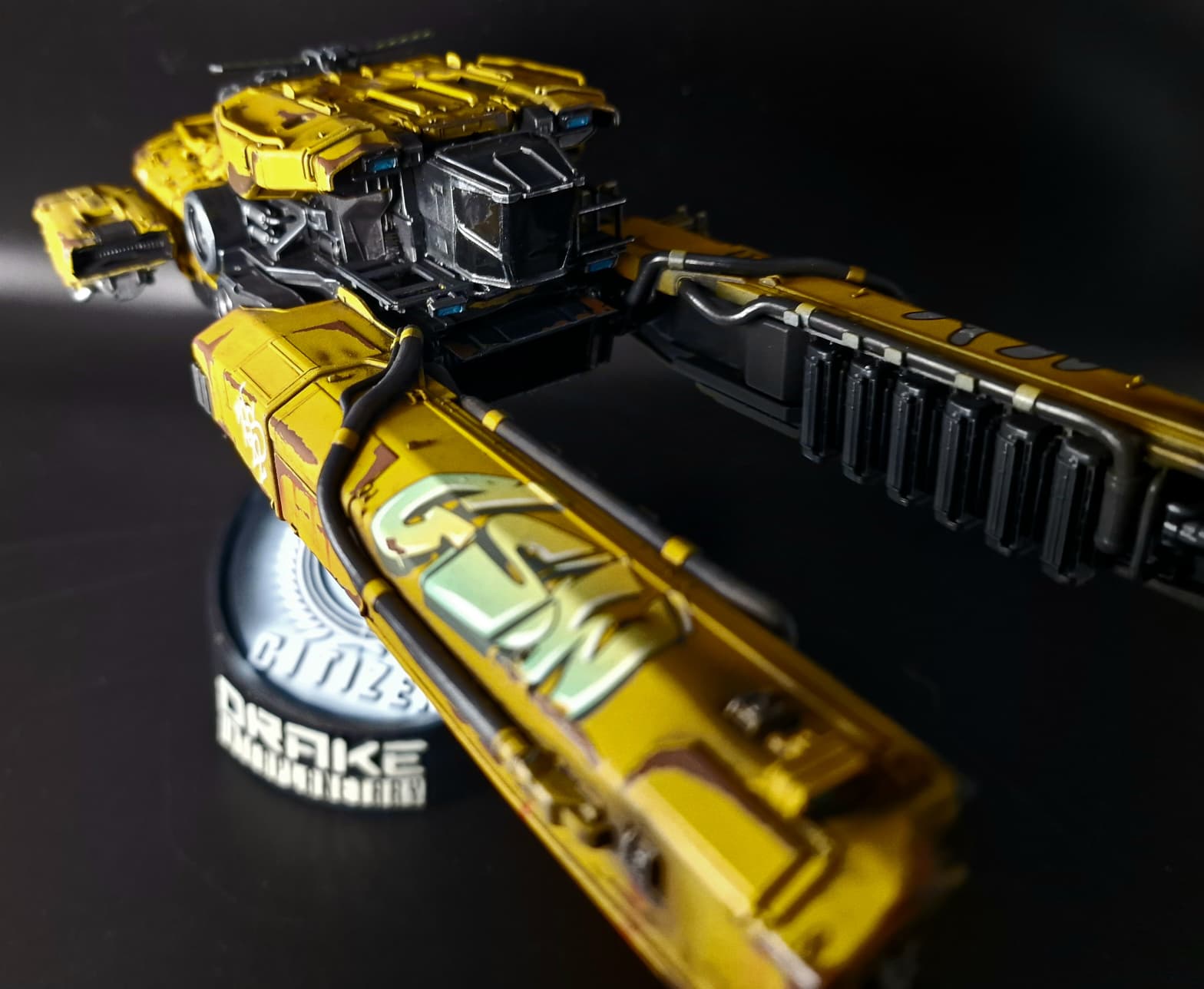
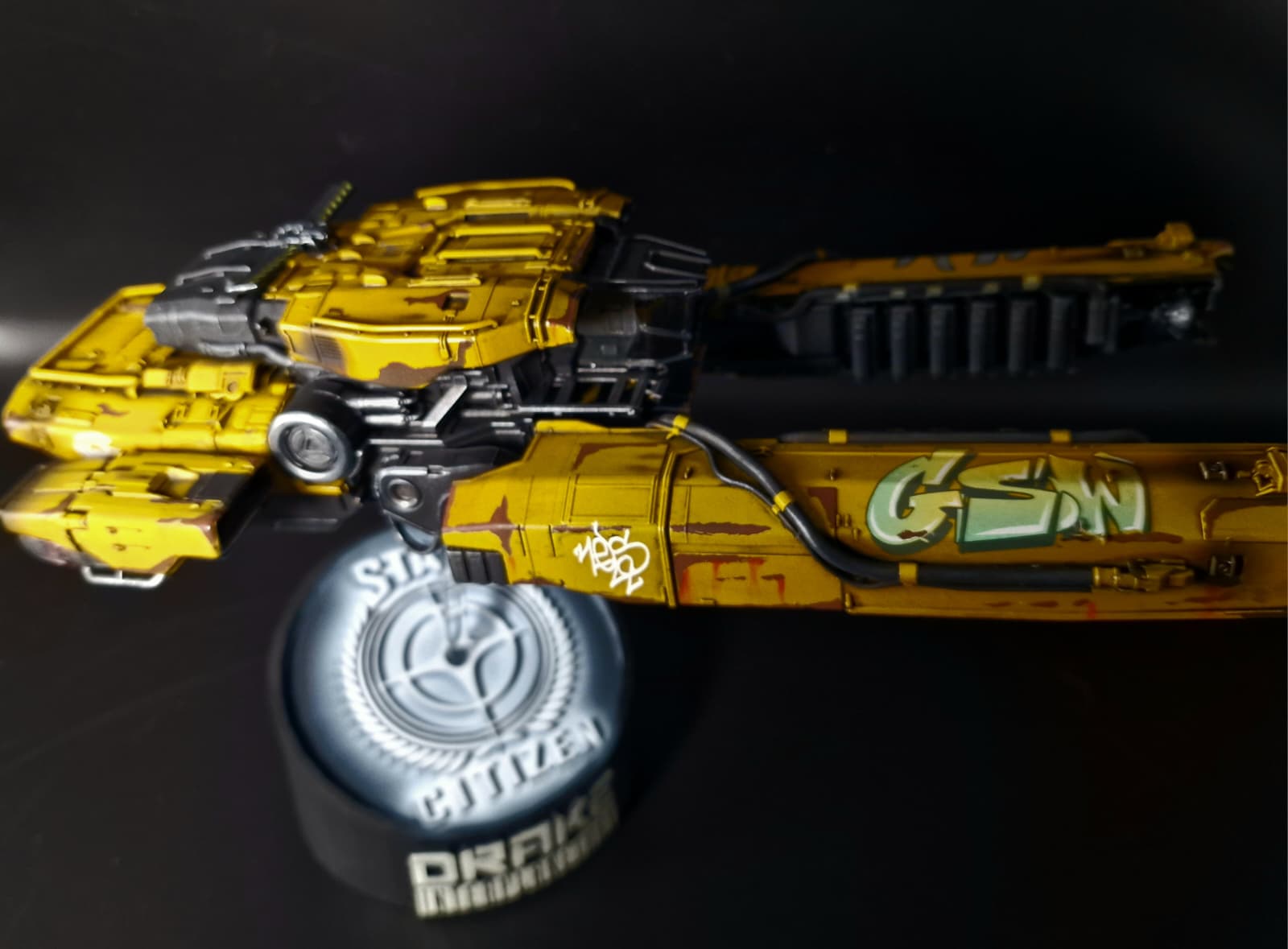
Polacus Workshop’s miniature brings that unusual silhouette into physical form. The photographs show the separation between the two salvage arms and the central body, while the workshop video adds another view of the painted model. The open space between the booms is as important to the outline as the structures themselves, making the Vulture easy to recognize among the fighters and transport ships in the collection.